
Why Hiring a Local West Palm Beach Roofing Contractor Pays Off for Homeowners
A roof in South Florida does more than keep out rain. It has to stand up to intense sun, sudden downpours, high humidity, tropical storm winds, and the permitting rules that come with building near the coast. That is why choosing a local roofing contractor is not just a convenience. It can affect how well the work is planned, approved, installed, maintained, and backed after the crew leaves.
For homeowners, the difference often shows up in practical ways: fewer permit surprises, better material recommendations, faster help after storms, and clearer accountability. A contractor who works in the area every week usually knows what local inspectors look for, which roofing details fail first in the climate, and how to respond when a small leak becomes urgent.
Local code knowledge helps prevent expensive mistakes
Roofing is one of the most regulated parts of a home because it affects wind resistance, water intrusion, energy performance, and structural safety. In Florida, roofing work must follow the Florida Building Code, which includes requirements for roof coverings, underlayment, fastening, flashing, and wind resistance. Local permitting offices and inspectors also apply these rules through the approval and inspection process.
A West Palm Beach roofing contractor who regularly works in Palm Beach County is more likely to understand:
When a permit is required for repair or replacement work
What documentation inspectors expect
How Florida product approvals affect roofing materials
Which roof assemblies meet local wind requirements
How to schedule inspections without slowing the job
This matters because roofing mistakes are not always visible from the curb. A roof can look finished and still fail inspection if the underlayment, fasteners, flashing, or ventilation details do not meet code. Correcting those issues after installation can add cost and delay.
For example, a homeowner replacing an older tile roof may focus on the visible tile. A local contractor will also pay close attention to the deck condition, roof-to-wall transitions, secondary water barriers, drip edge details, and underlayment choices. Those parts are less noticeable than tile color, but they play a major role in storm performance and inspection approval.
The practical payoff: local code familiarity reduces the chance of rework, failed inspections, and permit delays.
Regional climate experience leads to better roofing decisions
South Florida roofs age differently than roofs in colder or drier regions. The National Hurricane Center identifies the Atlantic hurricane season as running from June 1 through November 30, and Florida homes also deal with year-round UV exposure, heat, humidity, and frequent heavy rain.
For homes in West Palm Beach neighborhoods, that combination creates specific roofing concerns.
Sun and heat can shorten material life
Constant UV exposure dries out sealants, weakens some roofing components, and makes attic ventilation more important. A contractor who works locally can spot heat-related wear patterns, such as brittle sealant around penetrations or early aging near exposed roof edges.
Heavy rain tests flashing and underlayment
Fast-moving afternoon storms can expose weak points around valleys, vents, chimneys, skylights, and roof-to-wall transitions. A contractor familiar with local rain patterns knows that water management is just as important as the surface material.
Humidity encourages biological growth
High humidity can contribute to algae, mildew, and staining, especially on shaded roof sections. While stains are not always structural damage, they may signal drainage, shade, or maintenance issues worth reviewing.
Storm prep is part of responsible roof care
Local roofers understand that “good enough” is not a safe standard before storm season. Loose tiles, lifted shingles, cracked mortar, clogged valleys, and aging flashing can become bigger problems when wind and rain arrive together.
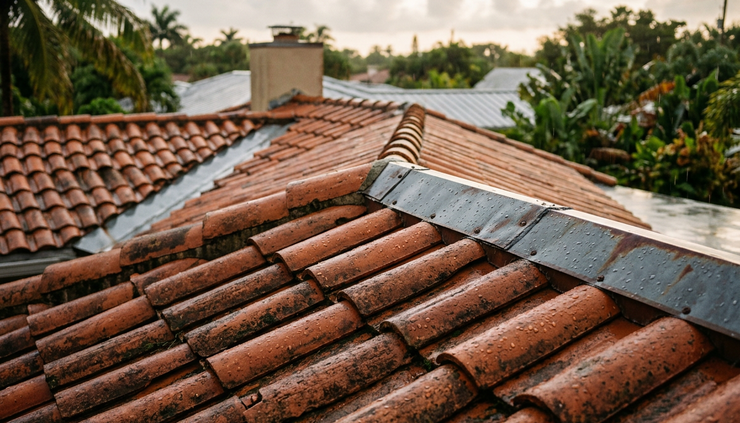
A nonlocal contractor may know roofing in general. A local contractor knows what tends to fail first in this climate. That experience can change the recommendation. Instead of treating every roof the same way, the contractor can suggest details that match local conditions, such as stronger water-shedding strategies, better ventilation checks, and pre-storm maintenance.
Reputation matters more when the company is part of the community
A local contractor’s reputation does not live in a distant call center. It lives in neighborhoods, referrals, driveway conversations, local reviews, and repeat work. That creates a different kind of accountability.
Homeowners often ask neighbors about roofers because roof work is high-trust work. The contractor needs access to the property, must protect landscaping and driveways, and has to leave behind work that performs for years. A company with strong community ties has a direct reason to communicate clearly, clean up well, and respond when questions come up later.
Many homeowners searching for anthony conti roofing local roofing contractor services are really looking for that combination: local experience, visible accountability, and someone who understands area homes rather than treating the job as a one-time transaction.
Because exact customer quotes should come from verified reviews or references, the examples below are best read as common local roofing situations homeowners face, not as invented endorsements.
Common homeowner situation | Why a local contractor helps |
A roof starts leaking after a strong afternoon storm | A nearby crew can often inspect sooner and identify whether the issue is flashing, tile movement, underlayment, or storm debris. |
A homeowner is preparing for insurance documentation | A local contractor can provide roof photos, condition notes, and repair scopes in a format homeowners can use when speaking with their insurer. |
An older tile roof needs replacement | Local experience helps with permitting, material selection, inspection scheduling, and planning around weather windows. |
A small repair is needed before hurricane season | A nearby company is more likely to understand seasonal demand and prioritize urgent weather-related risks. |
A homeowner near a coastal neighborhood, for example, may notice a ceiling stain after several days of heavy rain. A contractor unfamiliar with the area might focus only on the stain location. A local roofer is more likely to check the roof valley above it, look for wind-driven rain patterns, inspect flashing, and ask whether the leak appears only during storms from a certain direction.
That kind of troubleshooting comes from seeing the same regional problems again and again.
Faster response times can limit damage
Roof problems rarely improve with time. A small leak can wet insulation, stain drywall, damage wood decking, and create conditions for mold growth if water keeps entering the home. Speed matters.
A local contractor has an advantage because travel time, scheduling, and follow-up visits are easier to manage. That does not guarantee same-day service during a major storm period, when every roofing company may be busy, but it does make quick assessment more realistic.
Fast response is especially valuable for:
Active leaks
Missing or broken roof tiles
Lifted shingles
Storm debris damage
Loose flashing
Pre-sale roof concerns
Preventive maintenance before storm season

A local company also has a practical edge after the repair. If the issue continues or a new concern appears, follow-up is usually simpler. That matters because roof leaks can be tricky. Water may enter in one place and show up indoors several feet away. A contractor who can return and reassess without a long delay can save frustration.
Local roofers understand local home styles
West Palm Beach has a mix of roof types, including tile, shingle, flat and low-slope sections, and combinations of pitched and flat areas. Many homes also have older additions, patio roofs, roof-mounted equipment, skylights, and complex drainage points.
Local roofing contractors see these patterns often. They know how different roof sections age, how additions can create weak transitions, and where water tends to collect on low-slope areas.
Tile roofs are a good example. The tile you see from the street is only part of the system. The underlayment below the tile does much of the waterproofing work. Over time, tile can crack, shift, or hide underlayment wear. A contractor who works with tile roofs locally will know how to inspect without causing avoidable breakage, how to match repair methods to the roof’s age, and when a repair is no longer the most cost-effective choice.
That helps homeowners get better guidance. A good local contractor should be willing to explain:
What is urgent
What can be monitored
What should be repaired before storm season
What may require replacement planning
What code or permit issues affect the decision
Clear guidance is often just as valuable as the repair itself.
Hiring local supports the local economy
Roofing is skilled labor. When homeowners hire a local contractor, more of the project spending tends to stay close to home through wages, suppliers, subcontractors, fuel, equipment maintenance, permit activity, taxes, and related services.
That benefits the community, but it also benefits the homeowner in a practical way. A contractor rooted in the area has a stronger reason to maintain a good name. Local companies depend on referrals, repeat business, and long-term relationships. If a roof needs service years later, a local company is more likely to still be nearby and familiar with regional requirements.
Supporting local also helps preserve trade knowledge. Roofing in coastal Florida is not the same as roofing in a dry inland climate. The more experienced local crews remain active in the community, the more homeowners benefit from that shared knowledge.
What satisfied homeowners tend to value most
When homeowners speak positively about a roofing project, the comments usually focus on a few themes. The roof itself matters, of course, but the experience around the roof matters too.
Common points of satisfaction include:
The contractor explained the issue in plain language
The estimate clearly described the work
The crew protected the property
The company handled permits and inspections properly
The jobsite was cleaned up
The repair or replacement held up through rain
The contractor responded after the job when questions came up
Here is a realistic example. A homeowner notices a small brown spot on the ceiling in a guest room after a week of heavy rain. A local contractor inspects the roof and finds cracked tiles near a valley, plus worn flashing that allowed wind-driven rain to enter. Instead of only replacing the visible cracked tiles, the contractor addresses the water path, checks nearby underlayment, and explains what to watch for during the next storm.
That kind of repair is more useful than a quick patch because it solves the likely cause, not just the symptom.
Another example is a homeowner preparing to sell. A roof issue found during inspection can slow a closing. A local contractor familiar with common inspection concerns can document the roof condition, complete approved repairs, and provide paperwork the homeowner can share with the buyer’s side. That can reduce confusion and keep the process moving.
How to choose the right local roofing contractor
Local is a strong advantage, but it should not be the only qualification. Homeowners should still ask careful questions before hiring.
Look for a contractor who can provide:
Proof of required Florida licensing and insurance
A written scope of work
Clear permit guidance
Material and workmanship warranty details
Local references or recent project examples
Photos of the roof condition before and after work
A clear cleanup plan
Direct communication about schedule and weather delays
Be cautious with vague estimates, pressure tactics, unusually low pricing without detail, or anyone who suggests skipping permits when permits are required. A roof is too important for shortcuts.
The best roofing contractor is not always the one who can start the fastest or quote the lowest number. The better choice is often the company that explains the roof clearly, follows code, respects the property, and remains available after the job.
If a roof inspection, repair, or replacement is on the calendar, request a local roofing assessment before small problems turn into larger ones.
FAQ
Do I need a permit for roof repair in West Palm Beach?
Many roofing projects require permits, especially replacement work or larger repairs. Small repair rules can vary by scope. A local contractor can help determine what applies and coordinate the permit process when needed.
Why does local climate matter when choosing roofing materials?
South Florida roofs face strong sun, humidity, heavy rain, and tropical storm conditions. Materials, underlayment, flashing, fastening, and ventilation all need to match those conditions to perform well over time.
Is a local roofing contractor better after a storm?
A local contractor can often assess damage faster, understand common storm-related issues in the area, and return for follow-up if needed. During major storms, demand may be high, so early maintenance is still the best protection.
How often should a roof be inspected?
Many homeowners schedule an inspection once a year and after major storms. Older roofs, tile roofs with cracked pieces, or homes with past leaks may need closer monitoring.
What should I ask before hiring a roofer?
Ask about licensing, insurance, permits, warranties, local experience, cleanup, project timing, and how unexpected deck damage or code issues will be handled.
A local roofing contractor brings more than tools and materials. The real value is judgment shaped by local codes, local weather, local homes, and local accountability. For homeowners, that can mean smoother permitting, smarter repairs, faster help, and a roof better prepared for South Florida conditions.

Comments